Words of crazy,
from the workshop.
Our corner for thinking out loud. Half of what lands here is documentation, half is us working an idea in public, and some of it is a hunch that had no business working — until it did. We build in the open; this is where we say what we found. New entries as they happen.
The Retrieval Was Fine. The Agent Never Looked.
We built a four-tier memory system for our coding agents, then instrumented it to find what was still failing. It wasn't the retriever — every "forgotten" fact came back at rank 1. The failure was invocation, and what predicts it is how the task is framed. Includes the architecture, the numbers, the audit that caught us, and a build path you can point your own agent at.
Anatomy of an AI Fear Segment
A good argument about open-weight economics, and the exact moment it turns into something else. Four tells that a technical explainer has stopped reasoning and started steering — plus a five-step checklist you can reuse on any AI threat segment.
Mage-Flow, First Light
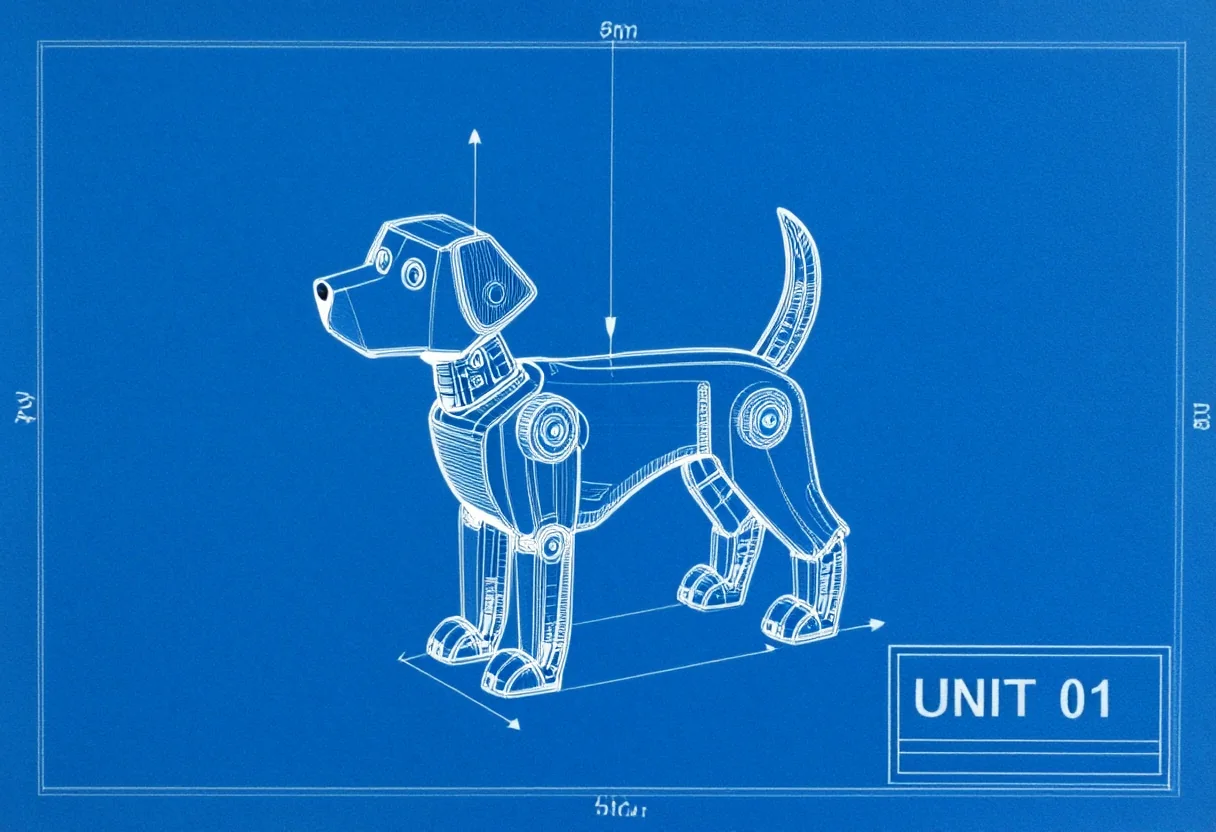
Microsoft shipped a 4B image model that does generation and instruction editing under an MIT licence — the licence being the part that usually kills these for client work. We had it measured on our own GPU the same evening. It beat its own published speed at half the advertised memory, and it renders readable text on embroidery, blueprints and screenprints. Eighteen images, one seed, no retries — plus the attention-backend trap that cost us an hour, written down so it doesn't cost you one.


Mage-Flow — The Full Sample Set
Every frame we generated while evaluating Mage-Flow: embroidered patches, cyanotype blueprints, risograph prints, a neon-noir alley, stained glass, and a three-step edit chain. One seed, first output kept, nothing cherry-picked.




Giving an AI Eyes on Video
How we let an AI actually watch a video instead of guessing from the title — scene-aware frame extraction, deduplicated shots, transcript from captions or local speech-to-text. The how-to, and what it costs to run.
audhd — Divergent Ideation for Coding Agents
Open source. Spawns isolated parallel agents under distorted cognitive frames to fight premature convergence, then scores and clusters what comes back. A fork of UditAkhourii/adhd that names the systematizing-critic half. MIT.
watch — Give Claude the Ability to Watch Video
Open source. Scene-aware frame extraction plus local-first speech recognition, so an agent can actually answer questions about a video instead of guessing from the title. Cloud transcription is opt-in, not required.
We Gave the Robots a Babysitter
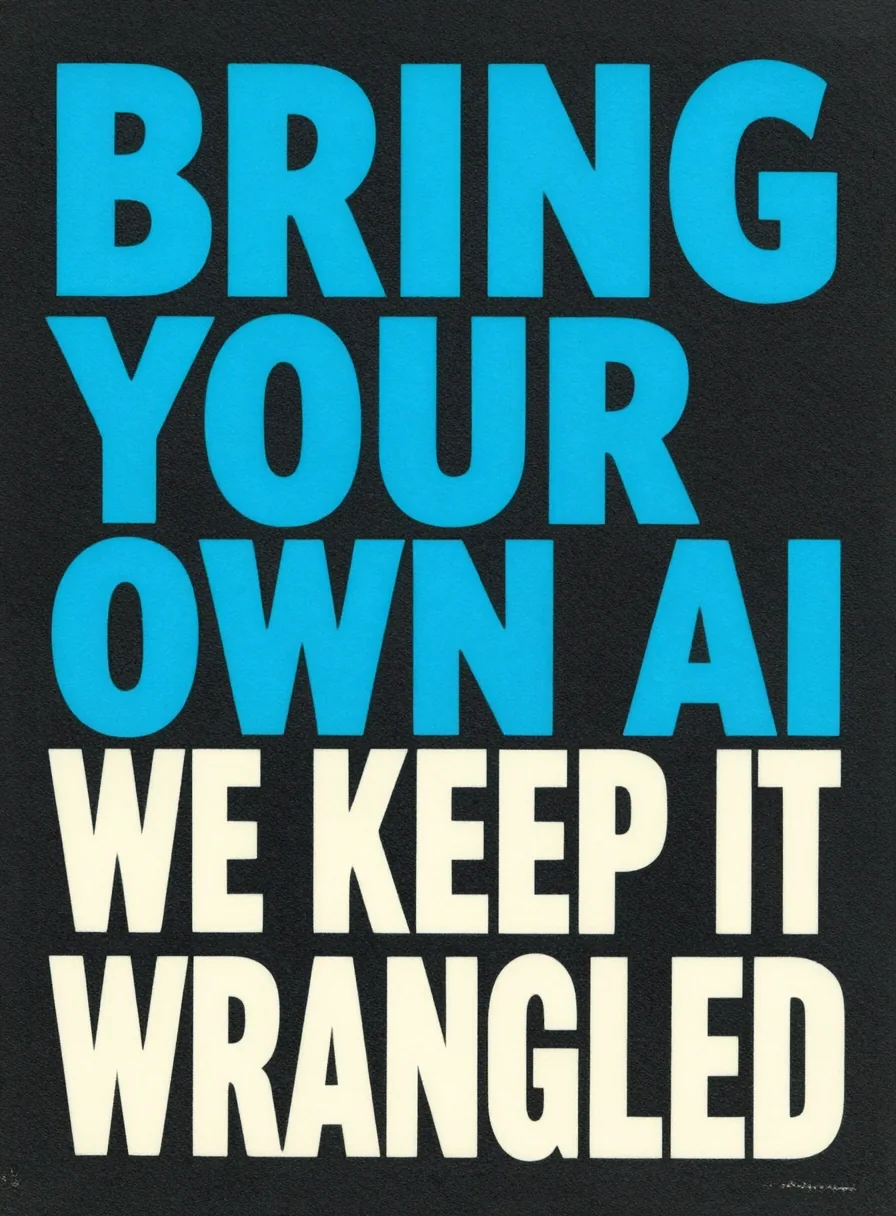
An autonomous agent with a terminal will happily run rm -rf if a poisoned web page tells it to. So before any of ours runs a command, a world model dry-runs it in an imagined world and flags DESTRUCTIVE before it happens. The predict-then-act gate that catches rm -rf, agentjacking, and exfil — and the honest reason “we keep it wrangled” is a mechanism, not a slogan.
SPECVOICE — Speculative Execution at the Dialog Layer
Borrowing a trick from CPU design and applying it to conversation: start computing the likely answer before the caller has finished asking. What speculative execution looks like when the pipeline is a voice agent rather than a processor.
Two Years to the Taste of the Stew
The honest arc — from fighting Windows to a fleet of local models that finally feel real. The MCP tool-use moment, a memory layer a frontier model graded A− (and told us exactly where we're still behind), the month local inference got real, and a take on the buggy-whip crowd.
Scrappy Tools — Teaching Small Models to Use CLI Tools
Small local models can drive real command-line tools if you teach them properly. What worked, what didn't, and why tool-use is the capability that makes a small model useful instead of merely fast.
Agentic Accounting
Bookkeeping by conversation instead of by form. Invoices, expenses, reports and purchase orders handled in plain English, wired straight into the accounting system you already run — with a human approving anything that writes.
Hear It Talk — Live Voice Demo
Our text-to-speech running live in your browser, across languages. Type something and hear it back — no signup, nothing to install.
- /watch v1.3.0 Rebuilt our video-understanding pipeline with scene-aware frame selection — one ffmpeg pass, no ML. It matched a trending 950★ open-source tool on frame quality while keeping the instant, timestamped, zero-cost transcripts it doesn't have. More in the essay →